
Baltimore Modular (BMOD)
Baltimore Rebuilds Baltimore.
Rebuilding Baltimore and our region through systems-based approaches to industrialized construction
Who we are
Catalyst & Hub
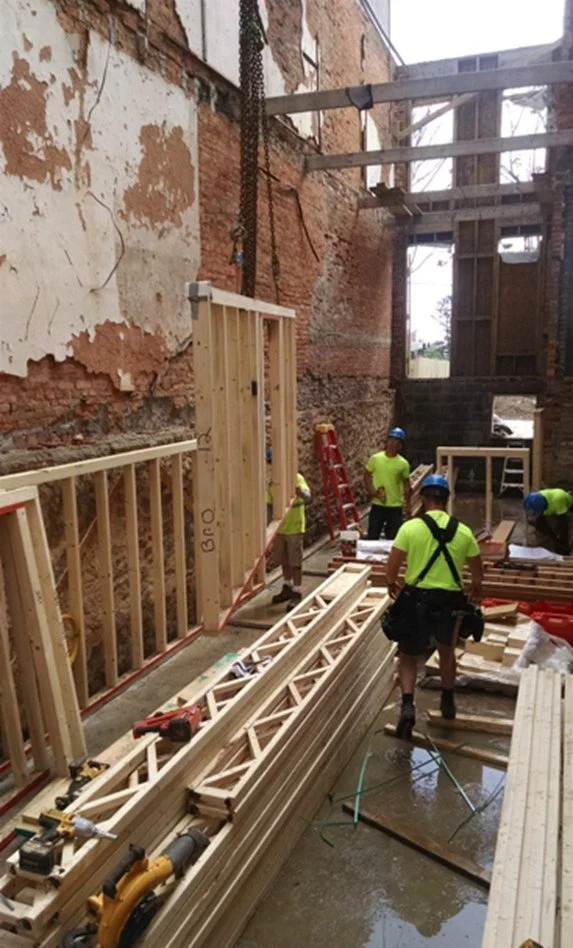
Baltimore Modular (BMOD) strives to be a catalyst and hub for Industrialized Housing Delivery (IHD) efforts across the Baltimore region, adapted for scalable scattered-lot infill construction, vacancy reuse and rehabilitation, and existing homeowner stabilization.
Baltimore is our motherboard: rather than displace or replace, we develop standardized interfaces linking existing conditions and stakeholders with industrialized housing products.
Start here
How we can work together
Rebuilding Baltimore takes residents, builders, researchers, government and funders working as one ecosystem. Start with the door that fits you.
-
Residents & homeowners
Rebuilding should start with the people already here. Tell us what your home and your block need.
Share your needs -
Community organizations
Bring your neighborhood’s priorities to BMOD’s workshops and pilot planning.
Join the conversation -
Developers & CDOs
Talk with us about pilots, demand aggregation and existing-conditions assessment for infill and rehab.
Explore Develop -
Manufacturers & builders
Help shape a modular product platform for Baltimore’s rowhouses and a local microfactory.
Explore Design & Make -
Researchers
Collaborate on existing-conditions data, supply chains, workforce and policy research.
See our research -
Government
Work with us to streamline permitting, codes and zoning for industrialized housing across the region.
Explore Impact -
Funders
Choose what you fund: pilot-ready projects, or the systems-based approach of BMOD’s six hub activities that lets projects scale.
Talk about funding -
Not sure where you fit?
Send us a note and we’ll connect you with the right person.
Connect with us
The BMOD Hub
Six activities
The BMOD Hub is to be both a physical space and a virtual network for six distinct — but often overlapping — activities.
-
Impact
Align regional government, education, industry and community stakeholders around friction-reducing, systems-based strategies.
-
Design
Refine, with a manufacturing partner, a modular product platform of interchangeable modules for new infill, retrofit and homeowner stabilization.
-
Make
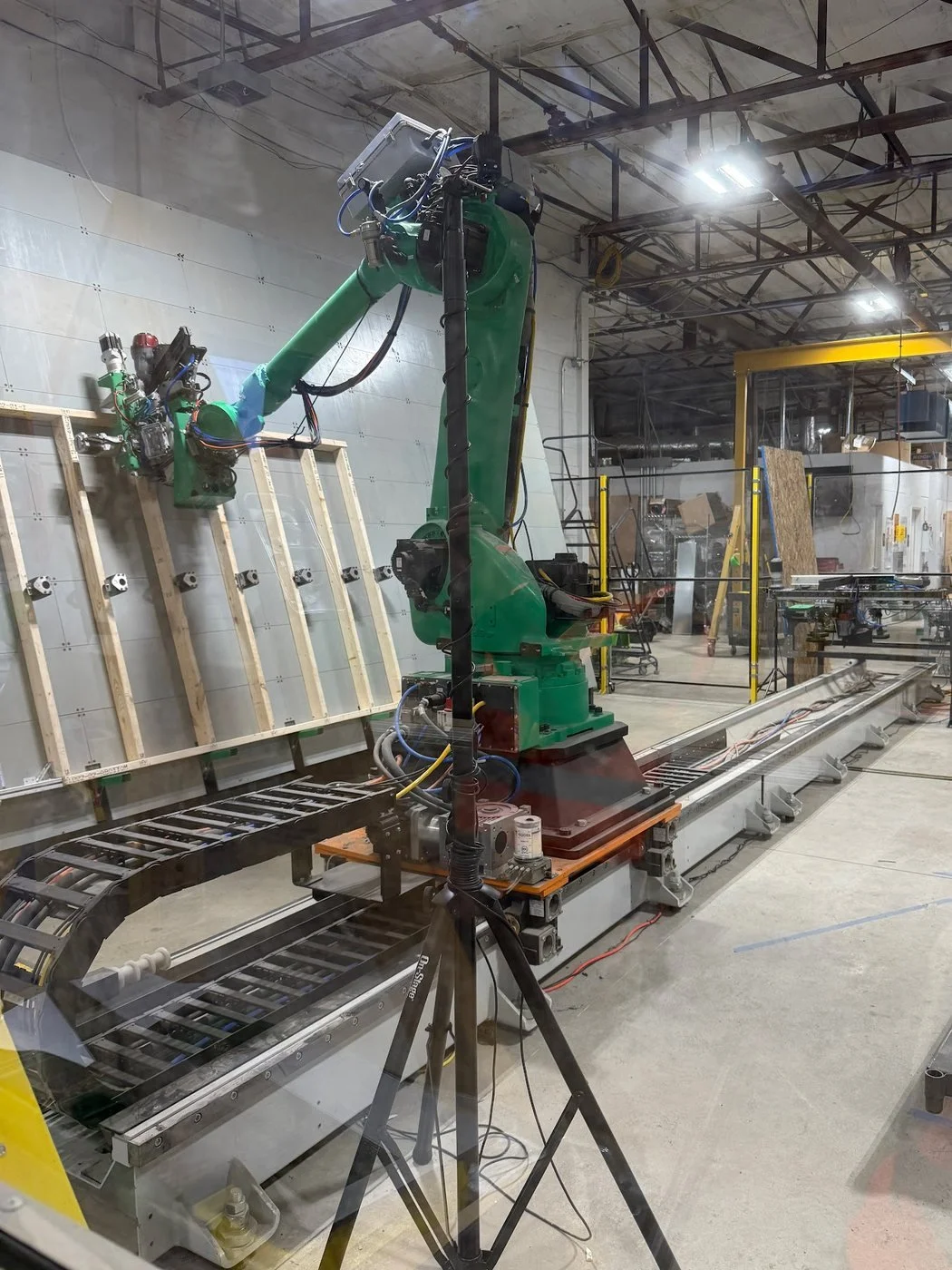
Establish a flexible Baltimore microfactory (2D + 3D systems) within a BMOD innovation hub activating the local supply chain.
-
Develop
Advance integrated project delivery frameworks for industrialized housing: predevelopment tools, demand aggregation and streamlined existing-conditions processes.
-
Work
Drive industrialized housing workforce development: apprenticeships, technical and professional training, and wraparound services.
-
Augment
In development
BMOD is exploring how AI agents could support its other five activities, drawing on public data and our partners’ expertise. Today this is research and planning; we will share what we learn as pilots are tested.
The need
An interconnected crisis
-
11,481
vacant buildings in Baltimore City
Source: Baltimore City DHCD, September 2026
-
21,620
vacant lots in Baltimore City
Source: Baltimore City DHCD, September 2026
-
1,677
older residents waiting for City home-repair help
Source: Baltimore City DHCD testimony to City Council, May 2026
The path
Building credibility, stage by stage
-
Year 0
Planning
EPA grant complete: concept platform, pilot design, hub and workforce research.
-
Year 1
Pilot
20+ properties, a mix of retrofit and infill.
-
Year 2
Microfactory
Local, vertically integrated production; jobs and supply chain.
-
Year 3
Scale & Replicate
Demonstrate, integrate, systematize: a model other legacy cities can adapt.
Latest news

Events
Upcoming
Conference session
The Urban Modular Playbook: How Cities are Accelerating and Unlocking Modular Construction for Housing
- Speakers
- Christina D. Long, AIA, with Angela D. Brooks, FAICP, Chief Housing and Urban Development Officer, City of Philadelphia
- Conference
- 2026 National Modular Housing Conference, Modular Home Builders Association, November 16–18, 2026
- When
- Tuesday, November 17, 2026, 3:00–4:00 p.m.
- Venue
- Westfields Marriott Washington Dulles, Chantilly, VA
Connect
Join the BMOD ecosystem
Tell us who you are and which of BMOD’s activities matter to you, and we will connect you with the right person.
Prefer email? Write to info@BaltimoreModular.org.